
How to Fix Stitch Density & Pull Compensation in Digitizing
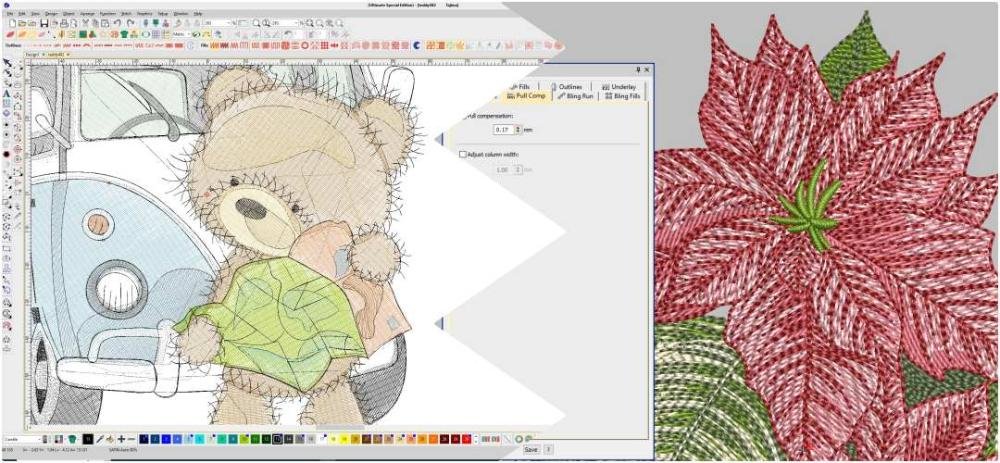
Two common challenges in embroidery digitizing are incorrect stitch density and pull compensation. When these settings are not properly adjusted, designs can look uneven, distorted, or poorly covered.
Understanding how they work is essential for creating professional embroidery.
What Is Stitch Density?
Stitch density refers to how closely embroidery stitches are placed within a design.
Too much density can cause:
- Fabric puckering
- Excessive thread use
- Heavy embroidery
- Thread breaks
Too little density can cause:
- Gaps in coverage
- Visible fabric
- Weak-looking designs
- Uneven results
The correct density depends on the fabric, thread, stitch type, and design size.
What Is Pull Compensation?
During embroidery, stitches can pull fabric toward the center of a design. This can make shapes appear smaller or create gaps between objects.
Pull compensation slightly extends certain embroidery objects to help maintain the intended shape after stitching.
It is particularly important for:
- Small lettering
- Satin stitches
- Rounded shapes
- Detailed logos
- Designs on stretchy fabrics
How to Fix Density Problems
Start by checking the design and fabric combination.
- Reduce excessive density when the design becomes too heavy.
- Increase density carefully when coverage is insufficient.
- Check the fabric and stabilizer.
- Test the design before final production.
Avoid simply adding more stitches to solve every coverage problem.
How to Improve Pull Compensation
If gaps appear between embroidered objects, the design may require additional pull compensation.
Make small adjustments and test stitch the design rather than applying large changes immediately.
Different fabrics can require different settings, so testing is an important part of professional digitizing.
Learn Better Digitizing Techniques
The Stitchmastery Course from EmbroiderySkills.com can help learners understand practical embroidery and digitizing techniques.
🌎 Available online worldwide
💰 Affordable pricing
🧵 Suitable for different skill levels
🚀 Practical, career-ready skills
For course information and enrollment:
info@embroideryskills.com
Final Thoughts
Correct stitch density and pull compensation can make a major difference in embroidery quality. By understanding how stitches interact with different fabrics and testing your designs carefully, you can create cleaner, more accurate, and professional embroidery results.